Many people hear the terms “will” and “trust” used interchangeably. While both are important estate planning tools, they serve different purposes under California law.
Understanding the difference between a will and a trust can help you make informed decisions about how your assets are managed and distributed. Each option offers unique benefits, and in some cases, both may be used together as part of a comprehensive estate plan.
This article explains how wills and trusts function in California and highlights key differences to consider.
What Is a Will?
A will is a legal document that outlines how you would like your assets distributed after your death. It can also name guardians for minor children and appoint an executor to carry out your instructions.
In California, a will typically:
- Names beneficiaries who will receive your assets
- Appoints an executor to manage your estate
- Identifies guardians for minor children
- Provides instructions for distributing property
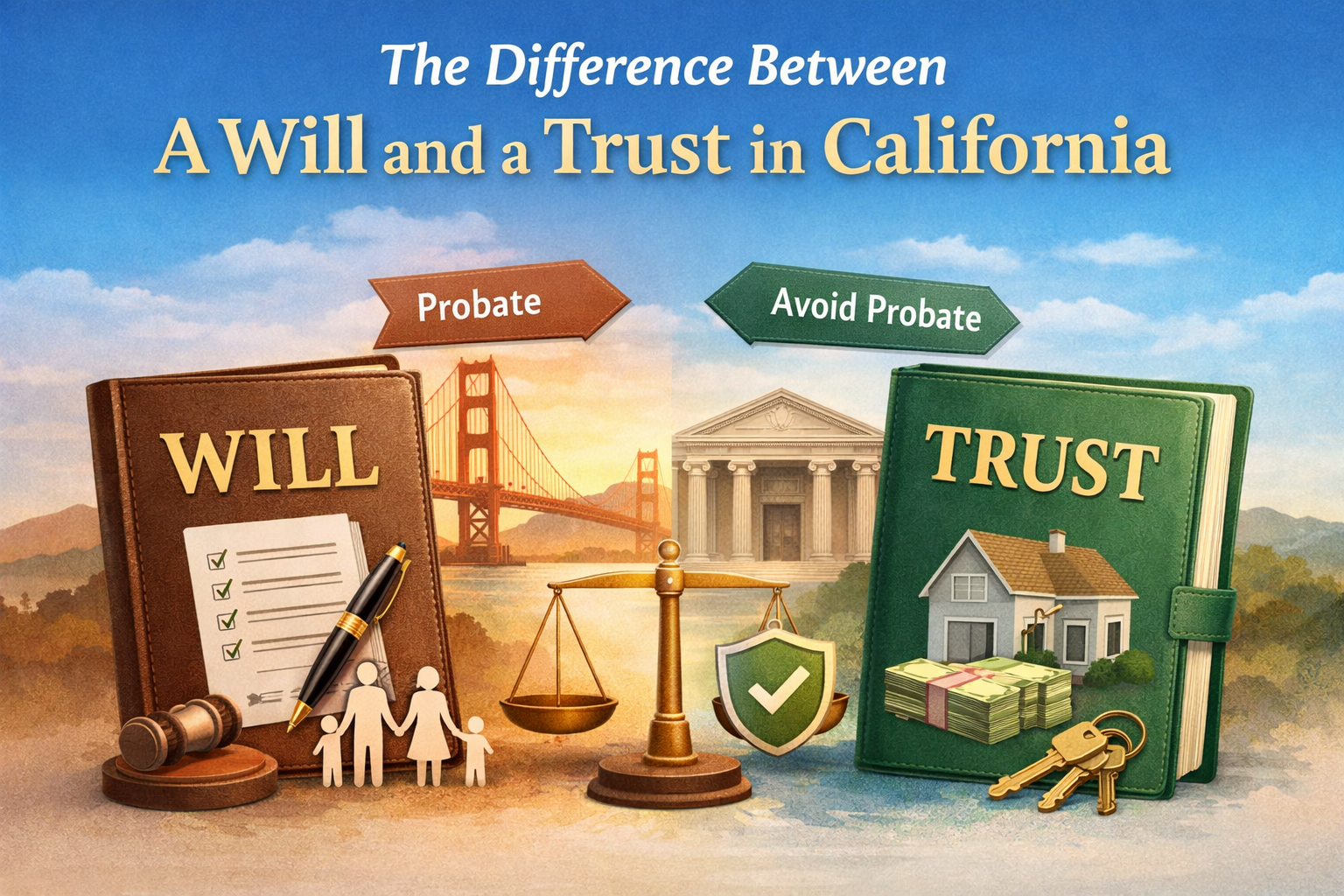
A will becomes effective only after death and generally must go through the California probate process. Probate is a court-supervised procedure used to validate the will and oversee the distribution of assets.
What Is a Trust?
A trust is a legal arrangement in which assets are held and managed by a trustee for the benefit of designated beneficiaries.
In California, a revocable living trust is commonly used in estate planning. With this type of trust:
- You can serve as your own trustee during your lifetime
- You maintain control over the assets placed in the trust
- A successor trustee takes over if you become incapacitated or pass away
Unlike a will, assets properly transferred into a trust generally do not need to go through probate. This can reduce court involvement and administrative delays.
Key Differences Between a Will and a Trust in California
When They Take Effect
- A will takes effect only after death.
- A trust can take effect during your lifetime and continue after death.
Probate Involvement
- A will typically requires probate.
- A properly funded trust may allow assets to pass without probate.
Privacy
- Probate proceedings are part of the public record.
- Trust administration is generally private.
Incapacity Planning
- A will does not address asset management if you become incapacitated.
- A trust can provide instructions for managing assets if you are unable to do so.
Do You Need a Will, a Trust, or Both?
The answer depends on your individual circumstances.
Some individuals with modest assets and straightforward wishes may rely primarily on a will. Others, particularly those who own real estate, have minor children, or want to minimize probate involvement, may benefit from establishing a trust.
In many California estate plans, a will and a trust are used together. For example, a “pour-over will” may be created alongside a living trust to ensure that any assets not transferred into the trust are directed appropriately.
Careful planning allows these tools to work together rather than replace one another.
When a Trust May Be Especially Helpful
While every situation is unique, a trust may offer additional flexibility in situations such as:
- Owning multiple properties
- Planning for blended families
- Providing for minor children over time
- Managing assets in the event of incapacity
- Seeking to reduce delays associated with probate
A trust can also allow more detailed instructions regarding how and when beneficiaries receive assets.
When a Will May Be Appropriate
A will remains an important document even if you have a trust. In some cases, individuals may choose a will as a primary planning tool if their estate is relatively simple and probate concerns are limited.
A will is also essential for naming guardians for minor children, even if a trust is part of the overall plan.
Reviewing Your Estate Plan Over Time
Whether you choose a will, a trust, or both, estate planning is not a one-time event. Life changes such as marriage, divorce, the birth of a child, relocation, or significant financial changes may require updates.
Regular review helps ensure that your estate plan continues to reflect your wishes under current California law.
A Thoughtful Approach to Estate Planning
Understanding the difference between a will and a trust in California can help reduce uncertainty and support informed decision-making. Each tool serves a specific purpose, and thoughtful planning allows you to tailor your estate plan to your needs.
Every family’s situation is different. If you would like guidance tailored to your circumstances, speaking with an experienced attorney can help clarify your options.
You may contact Rita Holder Law at (925) 482-8910 or [email protected] for more information.